Comparison · Updated
The best lucid dreaming apps in 2026
I've tried every major lucid dreaming app, many of them several times over the years. The best one for actually having lucid dreams is Lucidity: it teaches you step by step, with an interactive practice screen for every technique.
Our picks
 Best overall Lucidity Interactive program and practice screens for every technique
 Best for night audio Oniri Soundscapes and binaural beats
 Best audio course on iPhone Shape Calm guided sessions, at a high price
 Smallest budget Dream Journal Ultimate $2.99 once for written lessons and reminders
How I tested
I've been building Lucidity since 2013 and lucid dreaming for over 15 years. Over that time I've installed and paid for every serious lucid dreaming app, most of them more than once.
For this ranking I looked at what matters when you want your first lucid dream, not at feature counts:
- A real program. Does the app tell you what to do tonight, in the right order?
- Practice tools. Does it help you while you're doing the technique, half-asleep, or only explain it in text?
- The journal. Can you find your dream signs in it?
- Privacy and trust. Where do your dreams go, and is the app still updated?
Prices and update dates come from the App Store and Google Play in November 2026. Yes, I make one of these apps. I'll tell you exactly why I think it's the best, and where the others are good.
Comparison table
| Feature | Lucidity | Oniri | Shape | Dream Journal Ultimate |  Awoken |
|---|---|---|---|---|---|
| Basics | |||||
| iPhone | ✓ | ✓ | ✓ | ✓ | ✕ |
| Android | ✓ | ✓ | ✕ | ✓ | Stalled |
| Price | from $48/yr | $59.99/yr | $79.99/yr | $2.99 once | Free, ads |
| Free dream journal | ✓ Unlimited | ✓ | Basic | ✓ | With ads |
| Still updated | ✓ | ✓ | ✓ | ✓ | ✕ Since 2024 |
| Learn to lucid dream | |||||
| Step-by-step programLessons in a set order | ✓ 7 interactive modules | Lessons | Audio course | Written lessons | ✕ |
| Guided MILD, WILD, SSILDPractice screens with timers | ✓ | ✓ | Audio | ✕ | ✕ |
| Guided wake back to bedAlarm and routine in the app | ✓ Full routine | Set alarm yourself | Needs Watch | ✕ | ✕ |
| Reality-check reminders | ✓ Custom | ✓ | ✓ | ✓ | ✓ |
| Night audio | ✕ | ✓ | ✓ | ✕ | ✓ |
| Dream journal | |||||
| Voice to text | ✓ | ✓ | ✕ | Unreliable | Voice notes |
| People, places, emotions | ✓ Also automatic | ✓ | ✕ | Tags only | ✕ |
| Export your dreams | ✓ | ✓ | ✕ | Paid | ✕ |
| Import from other apps | ✓ | ✓ | ✕ | ✕ | ✕ |
| Privacy | |||||
| Dreams stay on your phone | ✓ | ✕ Account | ✓ | ✕ Account | ✓ |
| No public feed | ✓ | ✓ | ✓ | ✕ Dream wall | ✓ |
| PIN or Face ID lock | ✓ | ✓ | ✕ | Unreliable | ✓ |
| Dream interpretation | |||||
| AI dream interpretation | ✓ Unlimited | ✓ | ✕ | ✓ | ✕ |
| Personal dream dictionaryBuilt from your own dreams | ✓ From your dreams | Statistics | ✕ | Generic | ✕ |
| Emotion map | ✓ Emotion wheel | ✓ | ✕ | ✕ | ✕ |
From the App Store and Google Play listings, November 2026.
The 6 best lucid dreaming apps, ranked
Lucidity
Best overall · Best for learning to lucid dream
- Price
- Free, Pro from $48/yr
- Platforms
- iPhone, Android
- Rating
- 4.8 on Google Play
- Last update
- October 2026
Lucidity is the only app here that teaches lucid dreaming interactively. Other apps give you text lessons and leave you alone with them. In Lucidity, every induction method has its own practice screen: you see the technique, try it, and understand it by doing it.
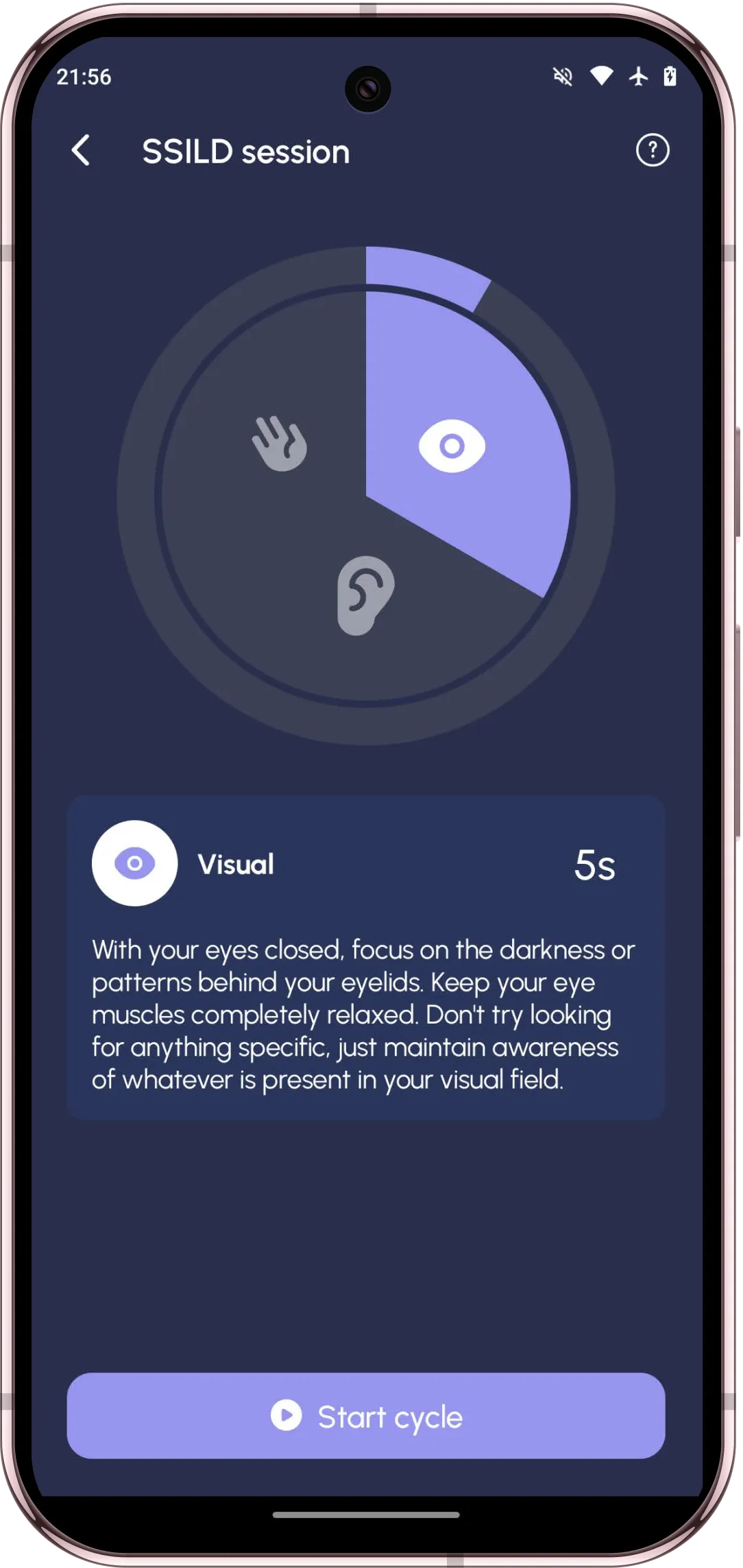
The SSILD screen is a good example. A dial runs you through the sight, touch and sound phases and counts for you, so you can let go and drift off. MILD, WILD and wake back to bed have their own guided screens.
Even Oniri, a competitor, called Lucidity's SSILD timer "the best implementation of that technique we found in any app".
Around the practice tools sits a 7-module program with Moony, your guide. You start by remembering your dreams and logging them, then improve your recall, then add reality checks and awareness exercises. The techniques open on day 4, when you have a base to build on.
The results back it up: about 65% of people who complete the program have their first lucid dream within three weeks. Your dreams also stay on your phone by default, and you can journal without an account.
Insanely good and works really well, it helped me get lucid in 4 nights and it explains clearly and in detail about my dream, the emotions, symbols and even a dream insight.
Google Play review
This is the only thing I've used since hearing about lucid dreaming, now I lucid dream, and it's only been 10 days.
Google Play review
Pros
- Interactive practice screen for every technique
- A 7-module program in the right order
- Complete wake back to bed routine with alarm
- Dreams stay on your phone, no account
- About 65% have their first lucid dream within 3 weeks of finishing the program
Cons
- No night audio
- No home-screen widgets yet
Oniri
Best for night audio and widgets
- Price
- Free, Premium $59.99/yr
- Platforms
- iPhone, Android
- Rating
- 3.7 on Google Play
- Last update
- October 2026
Oniri started as a dream journal and added lucid dreaming tools around it. The journal is detailed, and it's the app to pick if you want sound while you sleep, with soundscapes and binaural beats. What it lacks is a path. You get a set of techniques and have to work out the order yourself, which is where most beginners stall.
Pros
- Detailed dream journal with export
- Soundscapes and binaural beats
- Home-screen widgets
Cons
- Techniques without a step-by-step program
- You set the wake back to bed alarm yourself
- Journal stored in your Oniri account
- $59.99 a year
Shape
Best for guided audio on iPhone
- Price
- $79.99/yr
- Platforms
- iPhone only
- Rating
- 4.7 on the App Store
- Last update
- October 2026
Shape is a 30-day audio course. You press play and follow along. The sessions are good, but once the audio ends you're on your own, and the journal keeps little more than the dream and a lucid checkbox. At $79.99 a year on iPhone only, it's hard to recommend over a complete app.
Pros
- Calm, well-produced audio course
- Clean design
Cons
- iPhone only
- $79.99 a year, the most expensive here
- Very basic journal
- Wake back to bed needs an Apple Watch
Dream Journal Ultimate
Best for the smallest budget
- Price
- $2.99 once
- Platforms
- iPhone, Android
- Rating
- 4.2 on Google Play
- Last update
- October 2026
Dream Journal Ultimate is the budget option. For $2.99 you get a journal, reality-check reminders and written lessons. There's nothing to help you at night, so the technique itself is up to you.
Pros
- $2.99 once
- Reality-check reminders you can log
- Written lessons on several techniques
Cons
- No guided practice or wake back to bed
- Voice and PIN lock reported unreliable
- Public dream wall

LucidMe
Best for owners of the REMspace mask
- Price
- $69/yr, mask extra
- Platforms
- iPhone, Android
- Rating
- 3.6 on Google Play
- Last update
- November 2026
LucidMe is built around REMspace's sleep mask. Without the mask, it's mostly a video library, and new journal entries are shared publicly unless you change it. Not the place for private dreams.
Pros
- A large library of technique videos
- REM alarm with the REMspace mask
Cons
- Needs a sleep mask sold separately
- Dream entries are public by default
- No reality-check reminders
Awoken
Not updated since July 2024
- Price
- Free with ads
- Platforms
- Android only
- Rating
- 4.4 on Google Play
- Last update
- July 2024
Awoken was many people's first lucid dreaming app. Today it's abandoned: no update since July 2024, no iPhone version, and a backup that doesn't work anymore. If you used it, Lucidity has the same reality checks with totems, and a lot more.
Pros
- Free
- Reality checks with a totem sound
Cons
- Not updated since July 2024
- Android only
- Cloud backup no longer works
- Ads while you write
What actually gets you lucid
No app makes you lucid on its own. What works is a small set of habits, done in the right order, and then a technique at the right moment. Research on induction methods points the same way: a 2017 study by Aspy and colleagues found that reality testing combined with MILD and a short wake back to bed worked far better than reality testing alone.
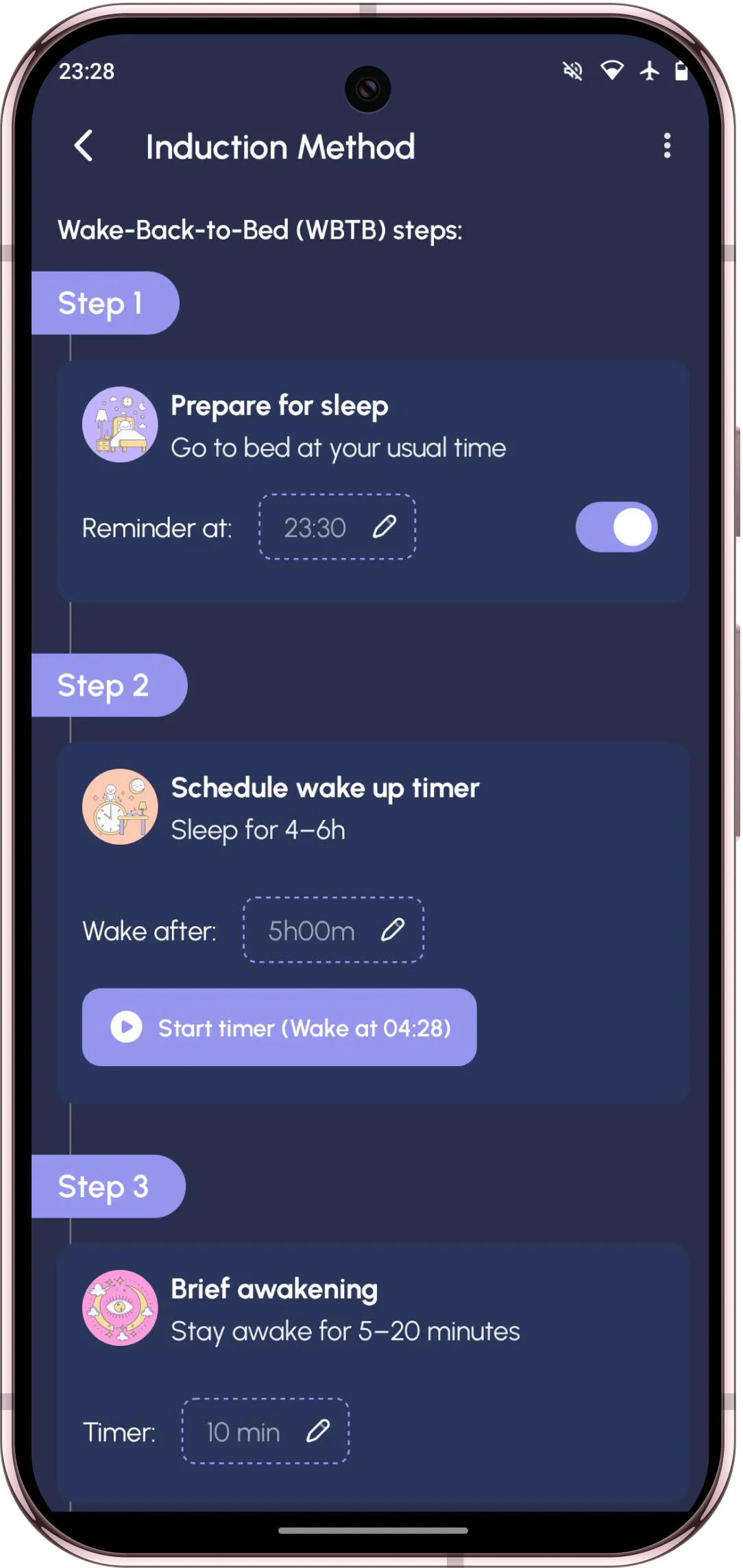
The single most effective moment to try is after a short awakening in the second half of the night. Your next dreams are long and vivid, and your mind is clear enough to notice you're dreaming.
Lucidity's wake back to bed routine sets the alarm after 4 to 6 hours, keeps you awake for a few minutes, then counts you through your technique as you fall back asleep.
My favorite technique is SSILD. I like connecting to my senses, and I like that it's a cycle you repeat until it works. And in the long run, the thing that keeps me stable in lucid dreams is daily meditation and awareness practice. When I'm busy or stressed and practice less, my lucid dreams get shorter and fuzzier.
How long until your first lucid dream?
It depends mostly on your dream recall when you start. If you already remember a dream most mornings, you can get there within the first week. If you rarely remember dreams, give yourself a few weeks.
My own first lucid dream took a few weeks. I was a student with terrible sleep habits, and it happened by chance on a night I wasn't even trying. A structured program gets most people there faster and more reliably than that.
Which lucid dreaming app should you choose?
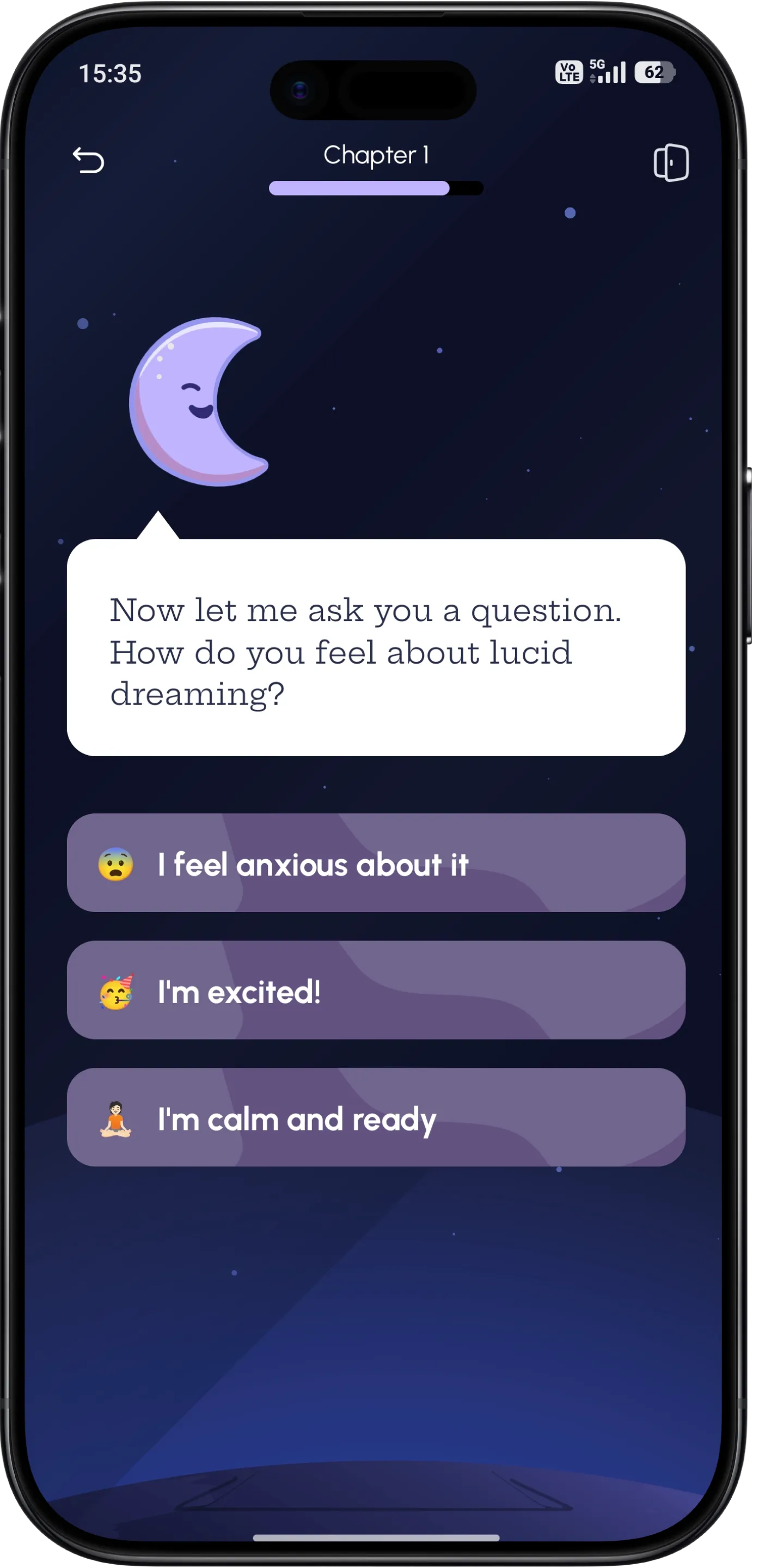
If you want to have lucid dreams, choose Lucidity. It's the only app that teaches you interactively, step by step, with practice tools for every technique. It's free to start on iPhone and Android, and your dreams stay on your phone.
Pick Oniri if night audio matters more to you than a program, Shape if you want guided audio on iPhone and don't mind the price, and Dream Journal Ultimate if you only want to spend $2.99.
Frequently asked questions
What is the best lucid dreaming app in 2026?
Lucidity. It's the only app that teaches lucid dreaming interactively, with a 7-module program and a dedicated practice screen for each technique: MILD, WILD, SSILD and wake back to bed. About 65% of people who complete the program have their first lucid dream within three weeks. It runs on iPhone and Android, and the dream journal is free.
Do lucid dreaming apps actually work?
A good one does, because it turns the habits that cause lucid dreams into a daily routine: remembering your dreams, reality checks, and a technique practiced at the right moment. Research on induction methods points the same way: combinations like reality testing with MILD and a short wake back to bed work better than any single trick.
What is the best free lucid dreaming app?
Lucidity's dream journal, reality-check reminders and first program lesson are free, with no ads and no account needed. Awoken is free with ads but hasn't been updated since July 2024.
Which lucid dreaming technique should a beginner start with?
Start with dream recall and reality checks for a few days, then MILD or SSILD. SSILD is a good first technique because it's a simple cycle through your senses that you repeat until you fall asleep. Lucidity opens the techniques on day 4, once the groundwork is in place.
Is there a lucid dreaming app for both iPhone and Android?
Yes. Lucidity, Oniri, Dream Journal Ultimate and LucidMe run on both. Shape is iPhone only, and Awoken is Android only.