Lucid dreaming guide · Updated
How to stay in a lucid dream without waking up
To stay in a lucid dream, calm down first. Stop moving, bring your dream hands together and take three slow breaths. Then keep your senses busy: rub your hands, touch things, and say out loud that you're dreaming.
Dream simulator
How does your lucid dream usually end?
Pick your answer, then save the dream below.


You're lucid. The dream is clear and steady.
Choose your answer above to see it fall apart.
I get excited and wake up
The thrill of realizing you're dreaming wakes you. It's the most common ending for a first lucid dream, and the easiest to fix.
In the dream
- Stop where you are. Don't run, don't fly, don't shout.
- Bring your dream hands together and take three big, slow breaths.
- Picture yourself calm. Then look at your hands and start walking slowly.
By day
After every reality check, do the three breaths with your hands together. Rehearsed by day, it happens by itself in the dream.
Everything fades or goes dark
Your senses let go of the dream. Sight usually goes first, and the scene blurs, greys out or turns black.
In the dream
- Rub your dream hands together and feel the warmth and friction.
- Touch what's near you: the floor, a wall, your own arms.
- Keep your eyes moving over details. Staring at one spot makes the scene dissolve.
- If it's already black, stay still and keep feeling your hands. The dream often comes back.
By day
When you do a reality check, name one thing you can see, one you can hear and one you can touch. You're training the senses that hold a dream together.
I slowly forget I'm dreaming
The dream's story pulled you back in. Nothing woke you. Your awareness thinned out until it was an ordinary dream again.
In the dream
- Say "I'm dreaming" out loud every time the scene changes.
- Repeat a reality check every minute or so.
- Hold one simple goal, decided before you fell asleep.
By day
This one is about awareness. A few minutes of meditation a day makes lucidity hold much longer, and so do reality checks done with real attention.
I wake up suddenly
Something outside the dream ended it: a noise, an alarm, your body moving, or the dream period running out.
In the dream
- When you wake, don't move and don't open your eyes.
- Picture the last scene and feel yourself standing in it.
- Give it a minute. You can often slip straight back in, still lucid.
By day
Practice on mornings with no alarm and no rush. The last dreams of the night are the longest, and nothing is waiting to cut them short.
I "wake up", but I'm still dreaming
A false awakening. The dream showed you your own bedroom, you believed it, and the lucid dream turned into a normal one.
In the dream
- Do a reality check every time you wake up. Every time.
- If it fails, you're still in the dream, and already lucid again.
By day
Make the first reality check of the day the one you do in bed, before you reach for your phone.
Why lucid dreams end early
You realize you're dreaming, your heart jumps, and two seconds later you're staring at your bedroom ceiling. Almost everyone's first lucid dream goes like this.
It happens because a lucid dream is a balancing act. You need enough awareness to know you're dreaming, and enough calm to stay asleep. Too much excitement and you wake up. Too little attention and the dream's story swallows you again.
The sudden ending is mostly excitement. The slow one is awareness running out. So the skill has two halves: calming down in the first seconds, then keeping your attention on the dream.
The first ten seconds: the anchor
Decide today what you will do the moment you become lucid. In the dream there's no time to think about it. This is the sequence the simulator above makes you rehearse:
- Stop. Don't run, don't fly, don't shout.
- Bring your dream hands together, the way you would to meditate.
- Take three big, slow breaths and picture yourself calm.
- Say it out loud: "This is a dream." Then look at your hands and start walking.
Flying can wait twenty seconds. A dream you've anchored first will still be there when you take off.
When the dream starts to fade
A fading dream warns you. Colors wash out, the picture blurs, sounds get thin. You have a few seconds, and that's enough.
Start with your hands. Rub them together and feel the heat, then touch the floor, a wall, the bark of a tree. Touch holds a dream together better than sight does.
Keep your eyes moving from detail to detail, because staring at one point is the fastest way to make a scene dissolve. You can also talk to the dream. Say "more clarity" out loud. It works more often than it should.
If everything has already gone black, don't give up on it. Stay still and keep feeling your hands, because the scene often rebuilds around you. And if you find yourself in bed, keep your eyes closed, don't move, and picture the place you just left. Many dreamers slip straight back in, still lucid.
The dream that pretends you woke up
You "wake up", get out of bed, and only later notice you were still dreaming. It's called a false awakening, and it steals the second half of a lot of lucid dreams.

The fix is a habit: do a reality check every time you wake up. If it fails, you're still in the dream, and lucid again.
Making lucid dreams last longer
The anchor saves a dream in the moment. What you do during the day decides how stable your lucid dreams are to begin with.
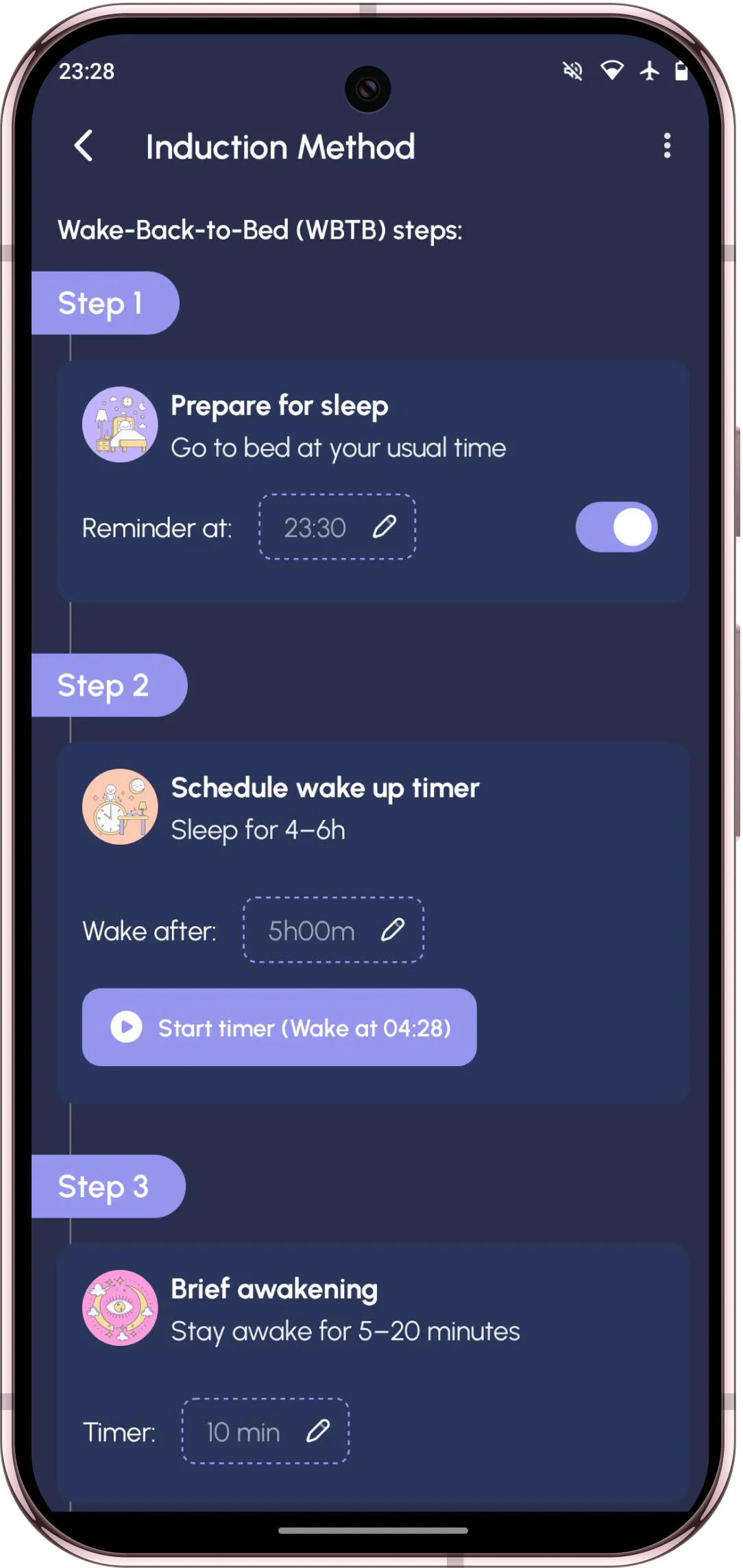
Dream in the morning. The last dream periods of the night are the longest, so a lucid dream that starts after five hours of sleep has room to run. I get my best ones on mornings when I wake up naturally and go back to bed.
Rehearse the anchor too. Do the three breaths after every reality check. A week of that and your dream self does it without being asked.
Go in with one goal
Pick it before you fall asleep: fly over your street, visit a beach, ask a dream character a question. A goal gives your attention something to hold. Without one, you wander until the dream takes over.
Write down how each one ended
After a few journal entries you'll see your pattern, and you'll know which half of the skill to work on.
What cuts a lucid dream short
- Going straight for the big thing. Flying or looking for someone in the first second is too much excitement at once.
- Closing your dream eyes. For many people this ends the dream on the spot.
- Standing still and thinking. Thinking about your sleeping body pulls you toward it.
- Staring. Fix one object for too long and it starts to melt.
- Skipping the reality check after you wake. That's how a false awakening steals the second half of the dream.
Train it with Lucidity
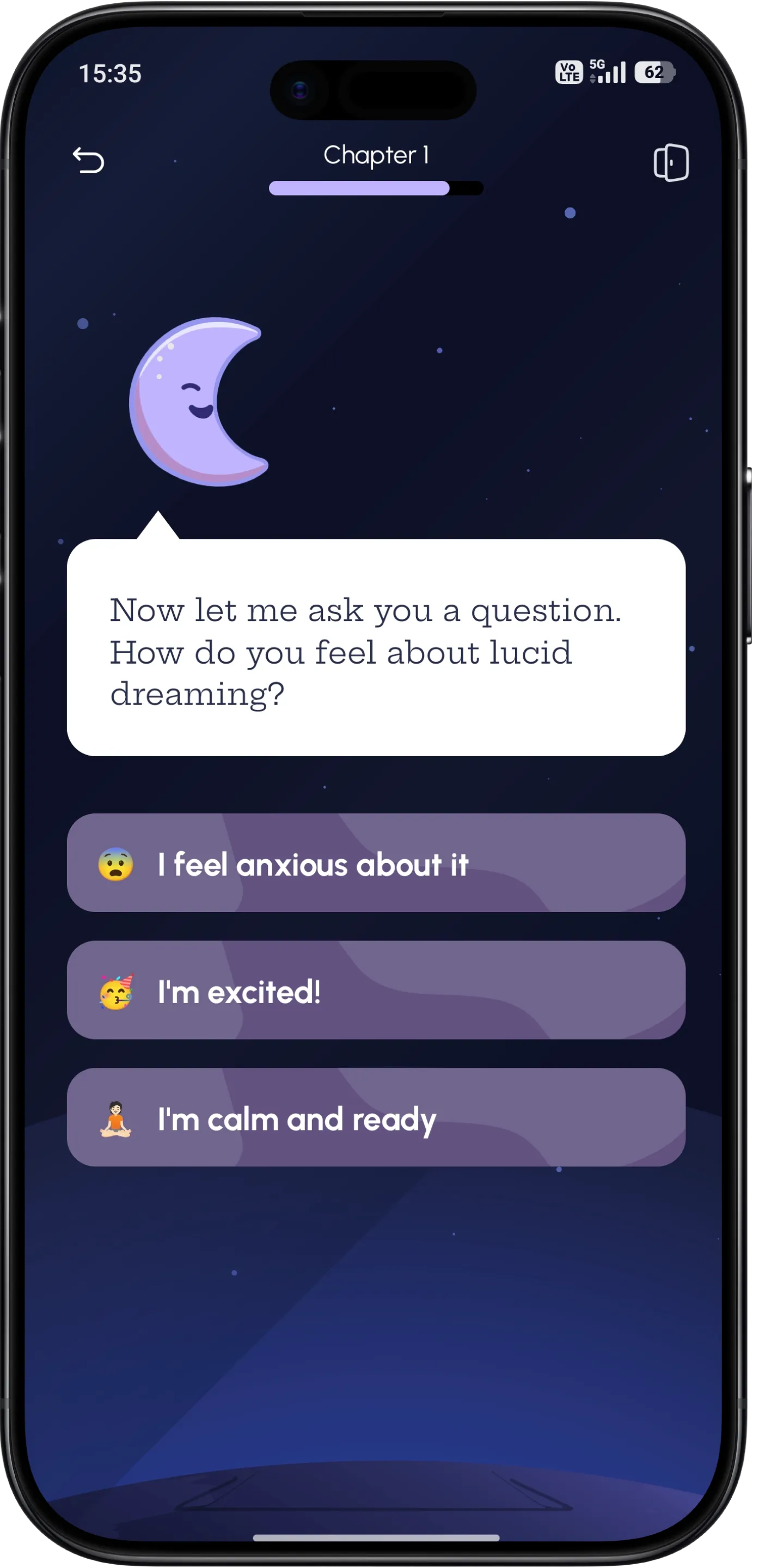
Lucidity's program teaches lucid dreaming in the order that works: dream recall first, then reality checks, then the techniques, and a module on stabilizing the dream once you're in it.
Reality-check reminders keep your awareness up during the day, and the dream journal is where you note how each lucid dream ended. The journal is free and your dreams stay on your phone.
Questions people ask
Why do I wake up as soon as I become lucid?
Because you get excited. Realizing you're dreaming is a thrill, and the thrill wakes you. Stop moving, bring your dream hands together and take three slow breaths before you do anything else. The dream settles within seconds.
How long can a lucid dream last?
A first lucid dream often lasts a few seconds to a couple of minutes. With practice they last many minutes, mostly in the morning when dream periods are longest.
Does spinning or rubbing your hands work?
Yes. Both flood the dream with sensation, which keeps it stable. Rubbing your hands is the easier one to start with, because spinning can also change the scene around you.
What do I do when the lucid dream goes black?
Stay still and keep feeling your dream hands. Rub them together or touch the ground. The scene often rebuilds itself. If you do wake up, keep your eyes closed, don't move, and picture the last scene to slip back in.
Why do I keep losing lucidity and drifting back into a normal dream?
The story of the dream pulls your attention away. Say "I'm dreaming" out loud whenever the scene changes, and repeat a reality check now and then. Daily meditation makes the biggest difference over time.