Lucid dreaming guide · Updated
How long does it take to lucid dream?
For most people, a few days to a few weeks of daily practice, and some manage it on the first night. Of the people who complete the Lucidity program, 65% have a lucid dream within three weeks.
From 50 years of research
Your brain can probably already do it
Out of every 100 people:
- 23have a lucid dream at least once a month
- 32more have had at least one, so 55 in total
- 45haven't had one yet
Pooled from decades of surveys in a 2016 meta-analysis (Saunders et al.).
Where are you now?
Pick the one that fits. You'll get what to focus on this week.
I rarely remember my dreams
Dream recall comes first
You can't notice you're dreaming in a dream you won't remember. Good dream recall is also one of the clearest predictors of success in lucid dreaming research.
This week
- Write something every morning, even one image or a feeling. Use the dream journal template.
- When you wake up, stay still with your eyes closed and replay the dream before you move.
- Before sleep, tell yourself once that you'll remember tonight's dreams.
- Skip alcohol in the evening. It cuts into REM sleep, where most dreams happen.
Move on once you remember a dream on most mornings. For many people that takes a few days.
I remember dreams, but I've never been lucid
Add awareness, then a technique
You have the raw material. Now you need the habit of questioning reality, and a technique done at the right time of night.
This week
- Do reality checks during the day, with real attention: stop, look around, and honestly ask if this could be a dream.
- Pick your dream signs from your journal and check reality whenever you meet one.
- Try wake back to bed on a morning you can sleep in, with MILD or SSILD as you fall back asleep.
- Stick with one technique for at least a week before judging it.
This is the stage where most people get their first lucid dream. With a steady routine, it often takes days to a few weeks.
I've had one, by accident or long ago
Make it happen on purpose
Your brain already knows how. What's missing is a routine that gives you the chance every night, and a way to stay in the dream once you're there.
This week
- Think back to that dream. What made you realize? That is probably your strongest dream sign.
- Journal every morning to find more signs, and reality check on them during the day.
- Use wake back to bed twice a week, with your technique as you fall back asleep.
- Learn the first-ten-seconds routine so the next one lasts: how to stay in a lucid dream.
Repeat what worked that night: the same time of night, the same technique, the same journal habit.
I've been trying for weeks with nothing
Back to basics, then a short break
After weeks of trying, the usual culprits are weak recall, reality checks done on autopilot, or switching methods too often.
This week
- Are you spending two or three minutes recalling your dreams every single morning? If not, start there.
- Are your reality checks real? A glance at your hand while thinking about lunch doesn't count.
- Keep the same method. Switching every few nights resets your progress.
- If it's really been a month, take three days off completely, then come back fresh.
Pressure works against you. My own first lucid dream came on a night I wasn't even trying.
The honest answer
Anywhere from one night to a few weeks. Where you land depends less on talent than on what you do each day.
Some people have a lucid dream the first night they try, usually people who already remember their dreams well. Most need a few days to a few weeks of daily practice. A few take longer, and almost always for reasons they can fix.
Structure helps a lot. Of the people who complete the Lucidity program, 65% have a lucid dream within three weeks.

What makes it faster
A few things decide whether it takes you days or weeks.
How well you remember your dreams
In the International Lucid Dream Induction Study (2020, 355 participants), good dream recall was one of the clearest predictors of success. If you barely remember your dreams, a week of journaling will do more for you than any technique. The dream journal template is a good start.
Practicing at the right time of night
Long dream periods come in the second half of the night. Waking after about five hours and doing your technique then is how the research does it. The wake back to bed calculator gives you the time.
Falling back asleep quickly
In the same study, people had more lucid dreams on nights they fell back asleep within ten minutes of their technique. Keep the awake part calm and dark.
Sticking with one technique
MILD and SSILD worked about equally well in that study. The one that works is the one you do every night.
The mistake that slows people down
That order is how the Lucidity program is built. Dream recall comes first, then reality checks, then the techniques. They open on day four, once the basics are in place.
If it's been a month
A month without a lucid dream is frustrating, and it's almost always fixable.
The break isn't a trick. Pressure and frustration before sleep work against you, and a few days off resets both.
How common lucid dreams are
More common than most people think. A 2016 meta-analysis of 50 years of research found that about 55% of people have had at least one lucid dream in their life, and about 23% have one at least once a month. That's the grid at the top of this page.
So for many people, the question isn't whether their brain can do it. It already has. The goal is to make it happen on purpose, and more often.
The Lucidity program
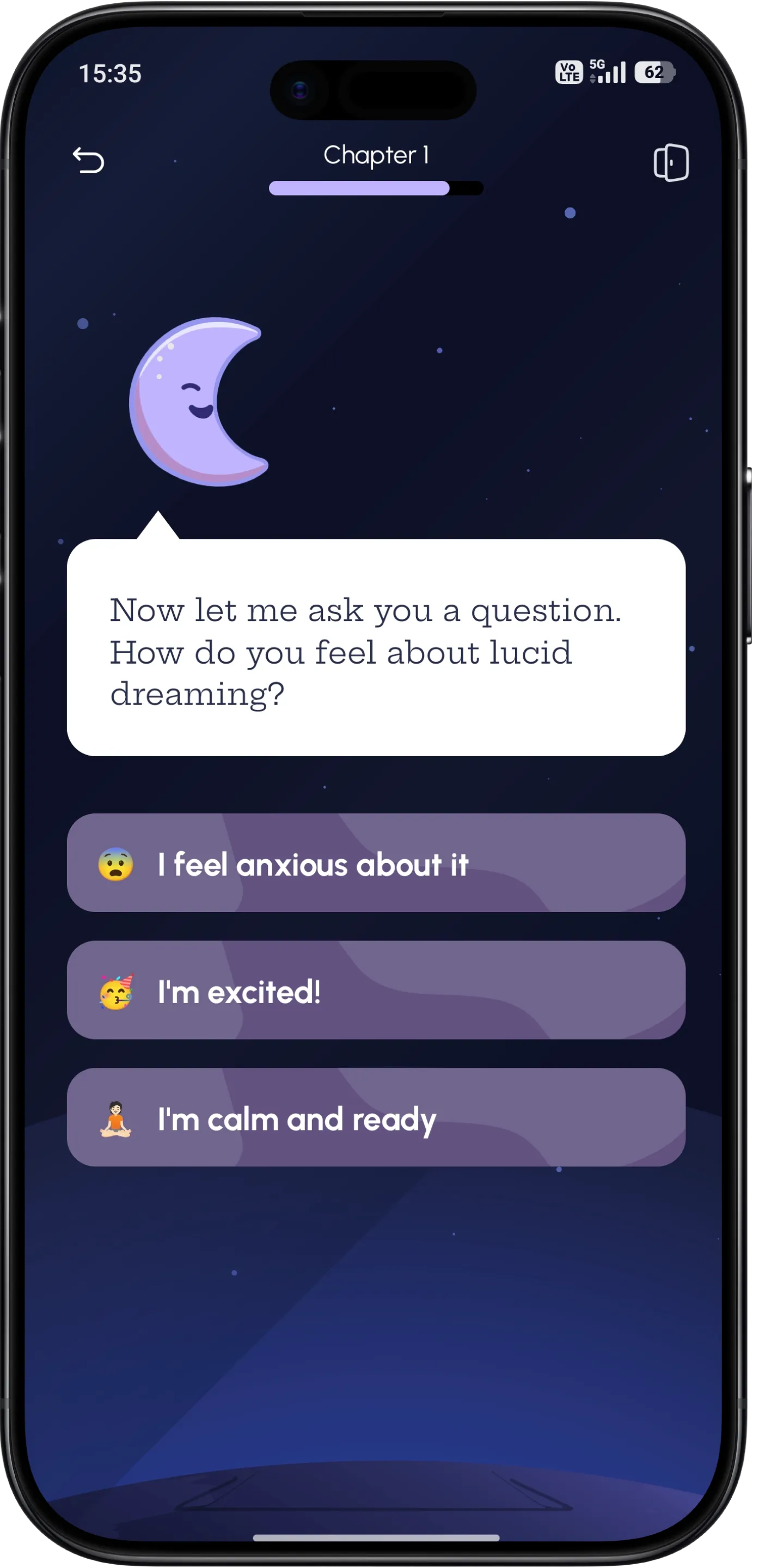
Lucidity teaches lucid dreaming as a course, with short morning and evening lessons. It starts with dream recall and reality checks, opens the techniques on day four, and guides each one with its own practice screen, including wake back to bed.
Of the people who complete the program, 65% have a lucid dream within three weeks. Your dream journal is free, and it stays on your phone.
Sources: Saunders et al., Lucid dreaming incidence: a quality effects meta-analysis of 50 years of research, Consciousness and Cognition, 2016. Findings from the International Lucid Dream Induction Study, Frontiers in Psychology, 2020.
Questions people ask
How long does it take to have your first lucid dream?
For most people, a few days to a few weeks of daily practice. Some manage it on the first night. Of the people who complete the Lucidity program, 65% have a lucid dream within three weeks.
Can you lucid dream on the first night?
Yes, some people do, especially those who already remember their dreams well. Most people get there faster by spending a few days on dream recall and reality checks first.
Why can't I lucid dream after weeks of trying?
The usual reasons are weak dream recall, reality checks done on autopilot, or switching techniques every few nights. Go back to the basics, keep one method, and if a month has passed, take three days off before trying again.
How many people have lucid dreams?
About 55% of people have had at least one lucid dream in their life, and about 23% have one at least once a month, according to a 2016 meta-analysis of 50 years of studies.
Which technique works fastest?
In the largest induction study so far, MILD and SSILD worked about equally well, both practiced after an alarm five hours into the night. Pick the one you enjoy and stick with it.